Energy Efficiency for London Homes – The Fabric‑First Approach
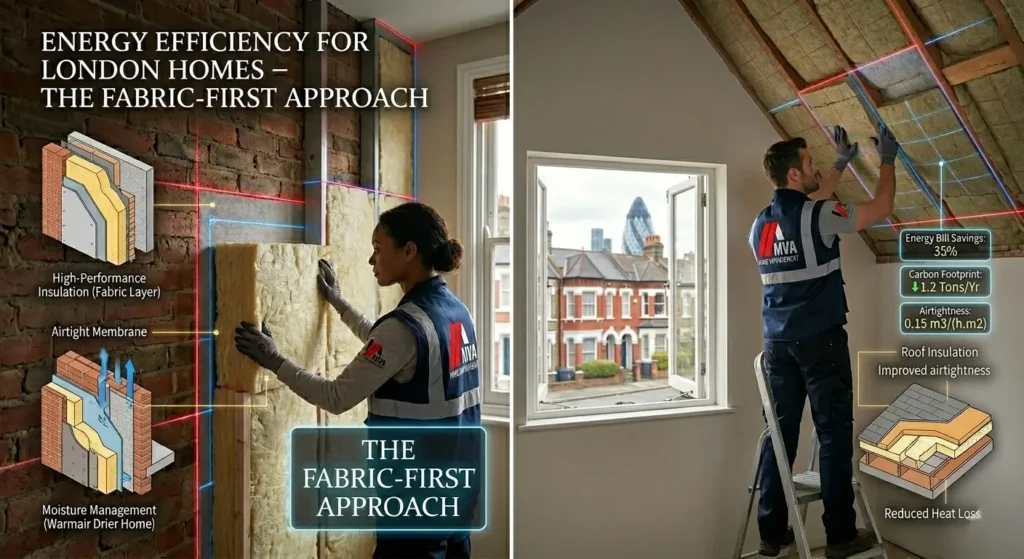
Reducing your energy bills and carbon footprint does not always require expensive technology. The most effective improvements start with your home’s fabric – the walls, roof, windows and floors. In London, where many homes are Victorian or Edwardian, improving insulation and airtightness can deliver dramatic results. This guide explains the fabric‑first approach to energy efficiency, focusing on what works and how MVA Home Improvement can help you achieve a warmer, drier, more efficient home.
1. Loft Insulation – The Low‑Hanging Fruit
Heat rises, and an uninsulated loft can lose up to 25% of your home’s warmth. Mineral wool or rigid foam boards installed between and over joists make an immediate difference. In London’s terraced houses, we also insulate the loft hatch and water pipes to prevent freezing. This is one of the simplest improvements with no ongoing costs.
2. Wall Insulation: Cavity, Solid or Internal
Homes built after 1920 often have cavity walls that can be filled with insulating beads or foam. Older solid walls (common in Victorian and Georgian properties) require internal or external insulation. Internal wall insulation (IWI) involves adding insulated plasterboard to room walls – ideal during a renovation. We use breathable materials where needed to prevent damp.
3. Double & Triple Glazing Upgrades
Single‑glazed windows are a major source of heat loss. Replacing them with double or triple glazing reduces draughts, cuts noise and improves security. In conservation areas, we can install slim‑profile double glazing that looks like original single glazing. We also repair and draught‑proof existing sash windows as a more affordable alternative.
4. Draught‑Proofing Doors, Windows & Floorboards
Draughts around front doors, letterboxes, keyholes and floorboards can waste significant heat. Simple silicone seals, brush strips and floorboard filler are low‑cost but highly effective. During a renovation, we can also seal around skirting boards and pipe entries. This is a classic fabric‑first improvement that pays for itself quickly.
5. Airtightness & Ventilation Balance
Making a home too airtight without providing ventilation can lead to condensation and mould. The fabric‑first approach balances insulation with controlled ventilation – such as trickle vents in windows or mechanical ventilation with heat recovery (MVHR). We assess your home’s existing ventilation and recommend solutions that keep indoor air healthy while minimising heat loss.
Ready to Improve Your Home’s Energy Efficiency?
At MVA Home Improvement, we specialise in fabric‑first upgrades that work with London’s unique housing stock. Our NAPIT‑registered team carries out surveys, installs insulation, replaces windows and draught‑proofs properties – all with fixed pricing and full certification. Contact us for a free energy assessment.
Start saving energy today – no complex technology required.
Call or email us for a free, no‑obligation consultation.