Full House Renovation Checklist London
Full House Renovation Checklist: From Planning to Completion
A full house renovation is one of the most rewarding investments you can make. It transforms the way you live, adds significant value to your property, and creates a home that truly works for you. But without a clear plan, it can quickly become overwhelming. This step‑by‑step checklist will guide you through every stage – from initial ideas to final sign‑off – so you can renovate with confidence. At MVA Home Improvement, we have managed hundreds of full‑house projects across London, helping homeowners avoid surprises and stay on track.
Phase 1: Planning & Budgeting (8–12 weeks before start)
1. Define your scope and priorities
List every room or system you want to change. Be specific: “new kitchen with island”, “rewire the whole house”, “strip out old plaster”, “install underfloor heating”. Separate “must‑haves” from “nice‑to‑haves”. This clarity prevents scope creep and helps you allocate your budget where it matters most.
2. Set a realistic budget including contingency
Research average costs for your type of project in London. A full house renovation typically starts from £50,000–£80,000 for a three‑bedroom terrace, but can go higher depending on finishes. Crucially, add a 15–20% contingency fund. Our experience shows that 88% of renovators encounter unforeseen expenses – hidden damp, old wiring, or structural surprises.
3. Check planning permission and building regulations
Not all internal works need planning permission, but structural changes, extensions, loft conversions, and work in conservation areas often do. We advise you to check with your local London borough. MVA handles all Building Regulations compliance and liaises with councils on your behalf, giving you peace of mind.
Phase 2: Design & Approvals (4–8 weeks before start)
4. Finalise your design and materials
Work with a designer or use a detailed mood board. Choose tiles, flooring, kitchen units, bathroom fixtures, paint colours, and lighting well ahead. Delays in material delivery are one of the biggest reasons projects overrun.
5. Obtain necessary approvals and party wall agreements
If your work involves shared walls (typical in London terraces), you may need a Party Wall Agreement with neighbours. We manage this process for you, including serving notices and liaising with surveyors.
6. Choose your contractor and sign a detailed contract
Look for NAPIT‑registered or equivalent accreditations. A good contract includes scope of work, payment schedule, start and end dates, and how variations are handled. At MVA, we provide fixed‑price quotes with clear terms – no hidden extras.
Phase 3: Preparation (1–2 weeks before start)
7. Declutter and protect your belongings
Empty each room as much as possible. Use dust sheets and temporary storage if needed. We take care of dust protection and site safety, but removing valuables is your responsibility.
8. Arrange temporary living if necessary
For a full‑house renovation, living on‑site can be stressful. Many of our London clients choose to rent or stay with family during the noisiest phases (demolition, plastering, screeding). We provide a realistic schedule so you can plan accordingly.
Phase 4: The Build (typically 12–20 weeks)
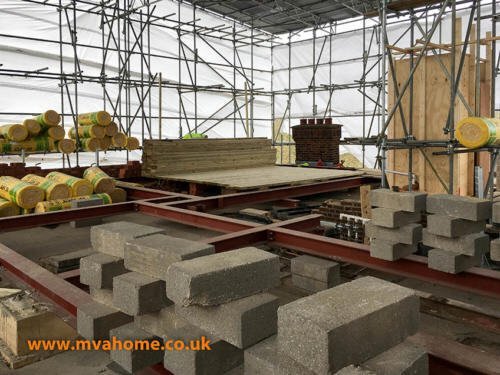
9. Demolition, stripping out, and structural work
We start by removing old fittings, knocking down non‑load‑bearing walls, and installing any steelwork. This phase is messy but essential. Our team coordinates skips, waste removal, and structural engineers.
10. First fix – plumbing, electrics, and ducting
All pipes, cables, and ducts are run inside walls and floors. This is the time to add extra sockets, data points, and speaker cables. We use NAPIT‑registered electricians and Gas Safe plumbers to ensure full compliance.
11. Plastering, flooring, and ceilings
Once first fix is inspected, walls are plastered, ceilings boarded, and floors prepared. We use breathable materials where needed, especially in period London homes.
12. Second fix – fixtures, fittings, and finishes
Kitchen installation, bathroom fitting, light switches, sockets, radiators, and painting. This is when your home truly starts to look finished.
Phase 5: Final Stages & Handover (1–2 weeks)
13. Snagging and quality inspection
We walk through every room with you, listing any minor defects or touch‑ups. Our team returns to fix all snags before final sign‑off.
14. Certification and documentation
You receive all necessary certificates: Building Regulations completion, electrical (NAPIT), gas safety, structural warranties, and product guarantees. Keep these safe – they add value when you sell.
15. Final clean and handover
A professional deep clean leaves your home sparkling. We explain how to operate any new systems (smart heating, underfloor heating, etc.) and leave you with a maintenance guide.
Ready to Start Your Full House Renovation?
If you are planning a complete home renovation in London, let’s talk. At MVA Home Improvement, we manage every stage – from planning and design to building and certification – so you can enjoy a stress‑free transformation. Our NAPIT‑registered team has completed hundreds of full‑house projects across Camden, Hackney, Islington, Kensington, and beyond. We offer free, no‑obligation consultations and fixed‑price quotes.
Ready to transform your home?
Contact us today for a free renovation assessment and a clear, fixed‑price quote.